
Six Forks Road: What Changed and Why It Matters

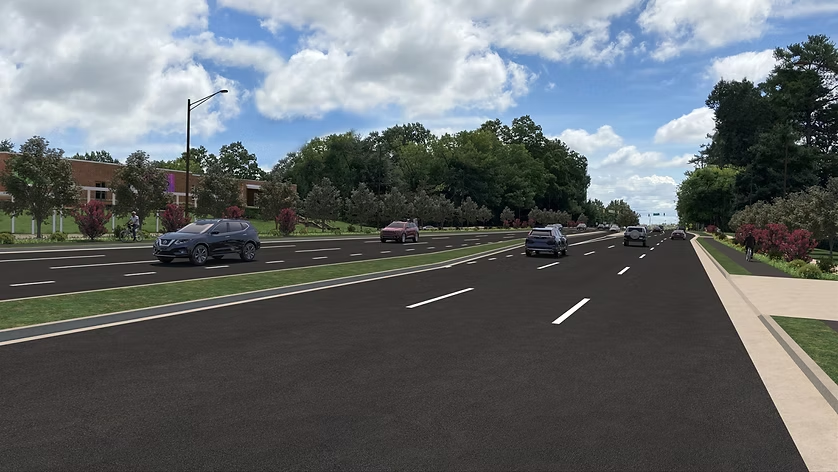
Six Forks Road has long been a pivotal corridor in Midtown Raleigh—serving as a vital connector for commuters, residents, and local businesses. For more than a decade, planning efforts focused on reimagining the road to improve safety, mobility, and multimodal connections. But after years of study, public engagement, and shifting priorities, the project has taken a different direction.
From Big Vision to Reality Check
The Six Forks Road Improvement Project originally aimed to widen the road, add continuous sidewalks, bike paths, transit enhancements, and streetscape features that would support a more walkable Midtown. This vision evolved from years of community input and planning discussions involving residents, businesses, and the Midtown Raleigh Alliance (MRA).
However, rising construction and real estate costs—which ballooned from earlier estimates into the tens of millions of dollars—made the original plan financially unfeasible. In mid-2025, the Raleigh City Council voted to scrap the widening project because the cost could no longer be matched with available funding.
Instead of moving forward with the original, expanded vision:
- The project was officially halted in its original form due to funding limitations.
- Council shifted focus toward smaller, targeted safety improvements that enhance walking and biking access in key segments.
- Remaining funds were reallocated to other City transportation priorities, such as the Midtown Multi-Modal Bridge design, Lake Wheeler Road improvements, and Barwell Road enhancements.
What’s Being Delivered Instead
While the original widening—including multi-use paths and expanded lanes—is no longer moving forward, the City is still planning practical, smaller-scale improvements aimed at boosting safety and connectivity where feasible. These include:
- Addressing sidewalk gaps (like the one near Carroll Middle School) that improve pedestrian continuity.
- Upgrading pedestrian crossings and signals at key intersections.
- Intersection enhancements to make turning and crossing safer for all road users.
These targeted efforts are designed to make meaningful improvements for people walking, biking, and taking transit—while preserving flexibility for future mobility planning.
Planning isn’t just about big plans—it’s about adapting to real conditions while still prioritizing community needs.

Why This Matters to Midtown
Even with the original project not moving forward as once planned, what happens on Six Forks Road affects people across Midtown:
- Pedestrian safety remains a priority as traffic volumes increase near North Hills and surrounding districts.
- Connectivity to local businesses and transit continues to shape daily life for residents and workers alike.
- Future mobility goals such as better bike access and walkability still rely on ongoing collaboration between residents, City leadership, and local stakeholders.
The evolution of the Six Forks Road project highlights a reality of planning and development: vision and cost must align for implementation. When they don’t, adaptability—and community advocacy—become essential.
Stay Engaged—Be Part of the Process
Planning and development in Midtown does not stop with one project. Whether it’s safety improvements, multimodal planning, or future transportation investments, the conversation continues—and your input matters.
By joining Midtown Raleigh Alliance, you’ll:
- Stay informed on mobility projects like Six Forks and other corridors
- Hear about how transportation planning affects neighborhood access and quality of life
- Be part of a community that advocates for thoughtful, collaborative planning outcomes