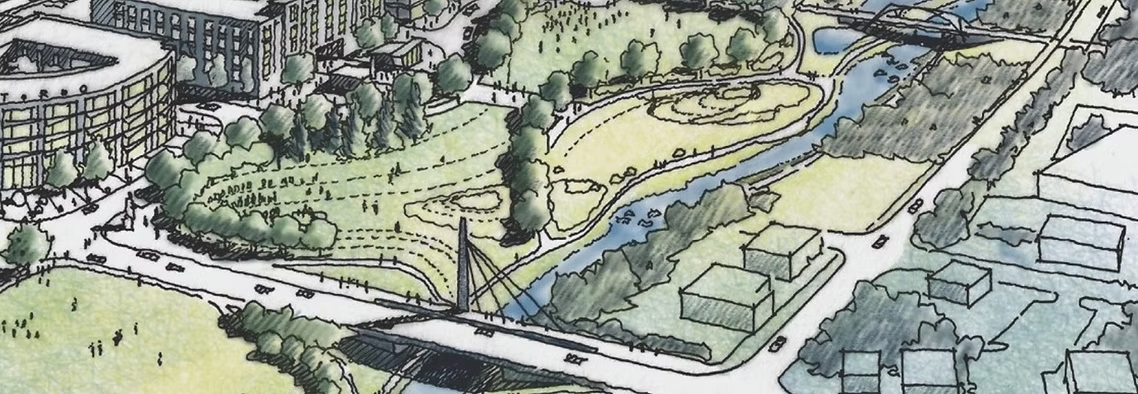
Midtown Raleigh is growing—and so is the need to make our streets safer, more accessible, and more enjoyable for everyone. That’s where the Walkable Midtown Plan comes in. Developed with community input and adopted by the Raleigh City Council in December 2020, the plan lays out a roadmap for a connected, pedestrian-friendly Midtown that works for residents, businesses, and visitors alike.
Six Forks Road has long been a pivotal corridor in Midtown Raleigh—serving as a vital connector for commuters, residents, and local businesses. For more than a decade, planning efforts focused on reimagining the road to improve safety, mobility, and multimodal connections. But after years of study, public engagement, and shifting priorities, the project has taken a different direction.
Midtown offers more than ever. More trendy places to dine, shop, live, work, and play. And more are on the way. Check out who recently opened and who you can expect in the near future.
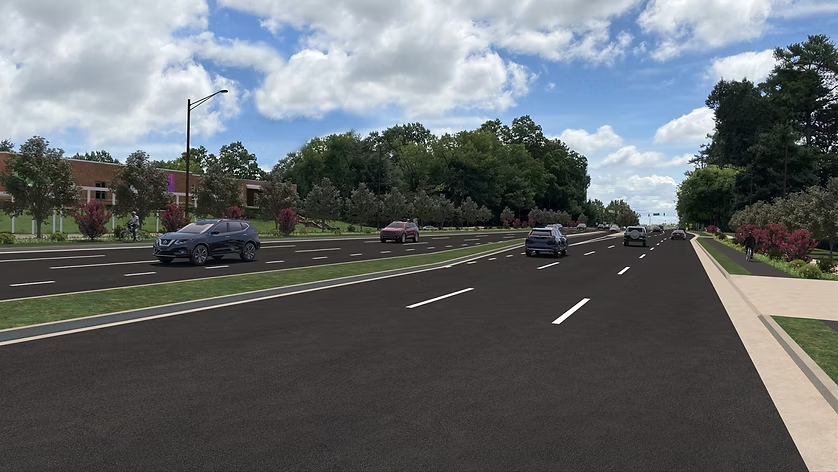
The Raleigh City Council voted unanimously to move forward with the Six Forks Rd Improvement Plan on February 20th. Construction is scheduled to begin in late 2025 to widen the road from 4 lanes to 6 lanes between Millbrook Road and Rowan Street, including the installation of a median. There will also be a designated 8-foot multi-use pathway for cyclists and pedestrians to move about the area more safely.
Midtown Raleigh isn’t just a place on a map—it’s a story of transformation, community, and vision. From a bustling shopping center in the 1960s to one of Raleigh’s most vibrant urban hubs, Midtown has grown through thoughtful evolution and collaboration.
A Neighborhood with Roots
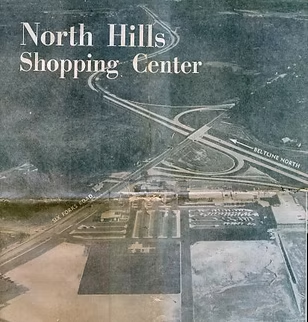
In the 1960s, the area we now call Midtown was defined by the North Hills Shopping Center, anchored by stores like Woolworth’s, JC Penney’s, and local favorites like Scottie’s hot dogs. For decades, it served as a central gathering place for residents and visitors alike. But as retail trends shifted, the shopping center declined, leaving a question mark over Midtown’s future.
By the mid‑1990s, visionaries in the community began imagining a new kind of Midtown—one that could honor its history while welcoming growth. Early efforts focused on revitalizing the area, encouraging local investment, and creating a neighborhood that could thrive economically, socially, and culturally.
A Growing Hub
As Raleigh expanded, Midtown became more than a shopping destination. New businesses, restaurants, schools, and parks began to define its character. Duke Raleigh Hospital expanded, First Citizens built multi-building campuses, and innovative companies chose Midtown as home. Residents found that the area offered both convenience and a sense of place: walkable streets, green spaces, and community-centered development.
The appeal of Midtown grew not just from its amenities, but from its blend of long-established neighborhoods and modern growth, creating a neighborhood that could feel both familiar and exciting.
The Midtown Raleigh Alliance: Supporting the Vision
Recognizing the opportunity to shape Midtown’s future collectively, community leaders, business owners, and stakeholders came together. In spring 2011, the Midtown Raleigh Alliance (MRA) was established. This nonprofit coalition set out with a clear mission: to promote Midtown, foster collaboration, and support sustainable growth.
The Alliance works to:
Highlight Midtown as a destination for businesses, residents, and visitors.
Advocate for community needs with city and county leaders.
Connect stakeholders to solve shared challenges and improve quality of life.
Strengthen the neighborhood’s identity through events, networking, and community engagement.
Through these efforts, MRA has become the backbone of Midtown’s ongoing transformation—a unifying voice ensuring that growth is intentional, inclusive, and reflective of the community’s values.
Be Part of the Midtown Story
Midtown’s story is still unfolding, and there’s a place for you in it. Join Midtown Raleigh Alliance and help shape the neighborhood you love—connect with local leaders, support exciting projects, and be part of a community that’s building something special.
The City Council is having to reassess the Six Fork Road Improvement project after numerous delays resulting in escalating costs. In 2011, the project was initiated by MRA, who requested a community visioning workshop. This workshop led to an exhaustive study of options and substantial community engagement. In 2017, funding was secured for the project’s largest phase through the passage of a transportation bond. The council adopted the plan in 2018, but the funds remain unused five years later, leaving residents and businesses in limbo. The staff has explored various options and is now seeking your input. Two things are clear at this point. First, the cost escalation is due almost entirely to the city’s inaction for the past several years; and any plan option that doesn’t include widening fails to meet the study’s original goals. After a decade of involvement, numerous paid consultants, and over 50 public meetings, the Midtown community deserves a real solution. These road improvements were factors in the approval of several rezoning cases around Midtown. Below is their request for your input.
What is it? If you live, work, or visit Midtown, specifically the Six Forks Corridor, you’ve heard about and/or been involved in the Six Forks Road Improvement Plan. Design for the road from Rowan Street to Lynn Road began in 2020 and involves lane expansion, roadway improvements, and bike and pedestrian lane options. Now, the city needs more input from you.
What is happening now? The project started in the spring of 2020, with a budget of $31.3M. However, with the significant increase in real estate and construction costs since 2020, the new budget for this proposed project is $119.0M. This large funding gap cannot be addressed with the City’s current funding resources.
What does this mean? City staff has come up with 5 options to address the funding gap and wants your input on which direction to proceed.
For more information and to weigh-in on the options, visit their Public Engagement Page.
Midtown Raleigh’s story isn’t told with words alone—it’s told through color, art, and the details you notice as you move through the neighborhood. From street banners to community-created artwork, Midtown’s graphic identity plays a quiet but powerful role in shaping how the district feels and how people connect to it.